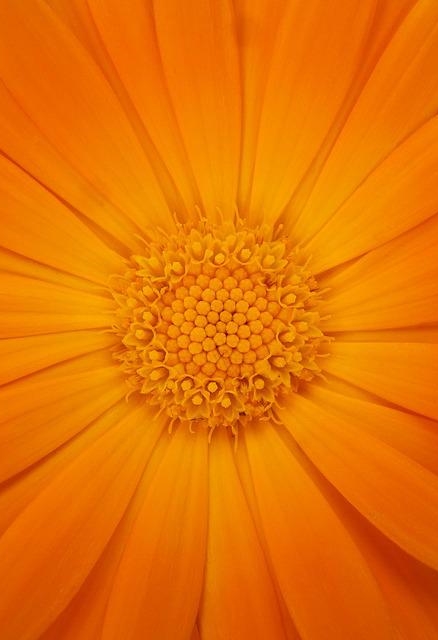
Marigold
Calendula officinalis
In Mexico, Marigolds are considered the flower of the dead.
During the Day of the Dead celebrations, which take place on the first two days of November,
ancestral altars are decorated with those flowers.
Thanks to their vibrant color and scent,
it was believed that the marigolds would help guide spirits of the dead to the altars.
Name: Marigold, Calendula officinalis
Other names: Buttercup, garden marigold, month flower, wildflower, fall flower, marigold, morning glory
Family: Compositae (Asteraceae)
Harvest month: May to October
Usable plant parts: Leaves, flowers
Leaf shape: lanceolate
Flower color: yellow, orange
Toxicity: non-toxic
Warning: Low potential for sensitization and contact dermatitis.
Caution in case of hypersensitivity to daisy family plants.
Ingredients: essential oils, bitter substances, flavonoids, glycosides, saponins, mucilages
Properties: decongestant, astringent, antibacterial, antiseptic, blood purifier, disinfectant, blood circulation stimulant, anti-inflammatory, antispasmodic, wound healer
Helps with: intestinal inflammations, eczema, gall bladder diseases, ulcers, skin inflammations, lymphatic congestion, stomach cramps, menstrual cramps, burns, warts, white discharge, wounds, gum inflammations
Plant uses
Cooking:
Young leaves and blossoms are edible and can be mixed into salads.
They are also used as a coloring spice, sometimes as a substitute for saffron.
Health:
Marigolds were proven popular in both folk and modern medicine
and can safely be ingested by children and babies.
They are a boost to the immune system and can help with clearing infections from the bloodstream.
Beauty:
It is above all, a remedy for skin problems and can be applied to stings and bites,
wounds, sore eyes, and sprains. When their flowers are added to shampoo or conditioner it can lighten the hair.