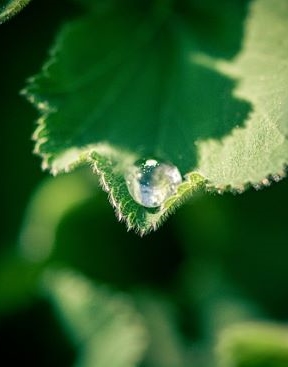
Lady's mantle
Alchemilla vulgaris
Its Latin name Alchemilla Vulgaris, tells its interesting story.
The plant is more beautiful after the storm when its large cuplike leaves catch the raindrops.
When alchemy was a popular academic pursuit in 18th Century Europe,
it was thought that the dew caught on these leaves possessed certain properties
that would turn base metals into gold. Hence the name Alchemilla.
In earlier history, its water was popular and often used as an additive to many potions
due to its supposed magical properties.
Name: common Lady's mantle, Alchemilla vulgaris
Other names: Alchemist's weed, Lady's weed, Tear's beauty, Pigeon's flower, Water's pennywort
Family: Rosaceae (rose family)
Harvest months: Apr-Aug
Usable plant parts: Leaves, flowers, shoots
Leaf shape: kidney-shaped, roundish
Flower color: yellow, green
Habitat: damp meadows, ditches, sparse woods
Risk of confusion: with other Lady's Mantle species, which can be used in the same way
Toxicity: non-toxic
Ingredients: essential oils, bitter substances, tannins, resins, organic acids, saponins
Properties: astringent, antibacterial, sedative, hemostatic, circulatory, anti-inflammatory
Helps with: Arteriosclerosis, eye inflammation, diabetes, diarrhea, eczema, colds, sore throat
Plant uses
Cooking:
This herb is edible, but for both humans and animals it shouldn't be consumed in masses.
Everything about the plant can be eaten, but they probably will taste best, when they are young.
It tastes quite bitter, due to its high amount of tannin.
Health:
As the name suggests, a lady's mantle is a great women's healing herb, regarding menstrual pain,
but equally, it helps with respiratory problems, gastrointestinal problems, and has a positive influence on the heart.
Beauty:
In homemade cosmetics, a lady's mantle has a firming effect on the skin and is said to fade freckles.